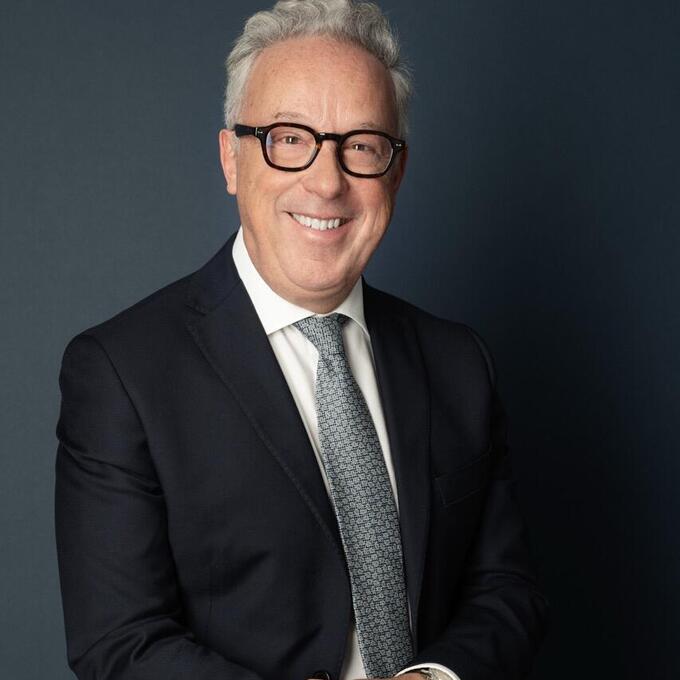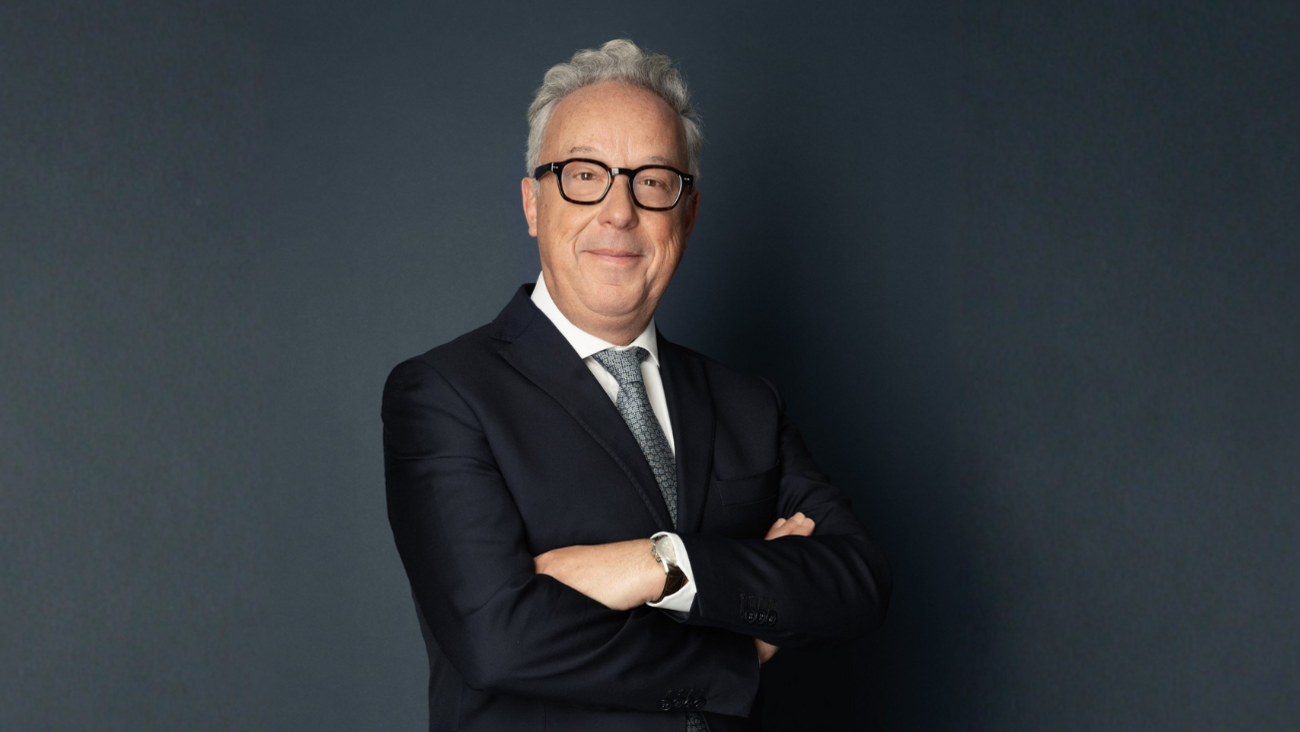

Mirabaud, the 200-year-old bank, is preparing for a technological transformation at a time when the largest transfer of wealth in history calls for modern tools. Lionel Aeschlimann, Senior Managing Partner of the Geneva-based firm, says he favors organic growth but does not rule out external growth in the future, should the right conditions be met.
You have strengthened your presence in the Middle East with the appointment of a new CEO for that market, Georges Khoueiri. How are your operations in Dubai faring, given the ongoing conflict?
Our top priority is the safety of our staff. In line with local guidelines, they can work from home or come into the office if they wish. As a result, the bank is fully operational. We were impressed by their calm response to the situation. In Dubai, we are the only Swiss bank to hold a Type 1 licence, which allows us to offer wealth management, including custody and all related banking services.
At the end of March, Mirabaud published its annual results: net profit jumped by 10% to 22.6 million francs. However, your total revenue is down slightly (to 255 million francs, compared with 282 million francs in 2024). How do you explain this situation where you are making more profit with lower turnover?
The slight decline in our revenues in 2025 compared with 2024 is due to three economic and strategic factors. Firstly, the fall in interest rates, which reduced our revenues by around 20 million francs. Secondly, an unfavourable exchange rate effect caused by the dollar’s depreciation against the franc, amounting to approximately 13% over 2025. Just under 40% of our revenues are generated in dollars, which mathematically reduces their value once converted into francs. And finally, the closure of our brokerage business, Mirabaud Securities, in autumn 2024, which had generated revenues in 2024 but also represented a significant cost centre.
This strategic refocusing on our core activities – private banking and asset management – has been accompanied by rigorous cost control and an increase in productivity per person within our teams, which explains the improvement in our profitability.
Neither a supermarket nor too small
The closure of Mirabaud Securities, coupled with a decline in assets under management (from 32.3 billion at the end of 2024 to 31.7 billion), looks like an austerity measure. Is Mirabaud too small for its international ambitions?
This represents a decline of less than 2% in assets under management; we regard this figure as stable, particularly – once again – given the impact of the weakening dollar. Furthermore, we have closed a number of accounts belonging to former major clients who were no longer strategic to our business. Whilst they generated little revenue, their closure has naturally had an impact on assets under management, but not on our ambitions or our results.
With regard to our international activities, we naturally cover Switzerland and Europe, where our roots lie, but also the Middle East from Dubai and Latin America, with a trend towards growth in these important markets.
Is the term ‘boutique bank’ too simplistic when applied to Mirabaud?
I have mixed feelings about this term. If it refers to a ‘house of excellence’ in the mould of certain luxury brands, it describes us perfectly. We are not a supermarket! If it implies a certain scale, I reject that notion. We have solid fundamentals and aim to continue growing; we are already one of the most international private banks in the country, with around 50% of our workforce based outside Switzerland.
‘Our top priority is the safety of our staff,’ says Lionel Aeschlimann, referring to the staff based in Dubai.
Technological shift
You maintain a CET 1 ratio of over 22.8% and a LCR of 218% (the measure of required capital and liquidity), exceeding FINMA’s requirements. In a Swiss banking sector undergoing post-crisis consolidation in 2023, does this strength form the basis for a future policy of external acquisitions, or are you planning strictly organic growth?
Our financial strength is a key asset; it is twice as strong as required by law. Throughout our history spanning more than 200 years, my predecessors have always ensured that we would grow solely through organic growth. This will remain our priority. An external acquisition is currently not on the agenda due to the supervisory measures still in place. Once the technological migration of our private banking business has been completed — in principle next year — and once the supervisory measures have been lifted, we could however be open to one or two targeted acquisitions appropriate in terms of corporate culture, our risk management, and the markets covered.
“Once the technology migration has been completed and the supervisory measures have been lifted, we may be open to one or two targeted acquisitions”
We are on the cusp of the largest generational transfer of wealth in history, from baby boomers to their children, who are often more cost-conscious and less inclined to visit a branch. How do you engage with them?
Indeed, we are likely on the cusp of the largest transfer of wealth in history. Faced with the challenge of a younger client base, we must offer cutting-edge, modern and connected banking tools, in addition to the personalised management and advisory approach we already provide. This is the main reason why we are undertaking our technological transformation, which requires so much effort on our part, as well as a considerable investment (at least 150 million, as confirmed by the bank, ed.), to bring us closer, in terms of customer experience, to fintechs and neobanks.
Just because we have 200 years of history behind us does not mean we are set in our ways. On the contrary, it is our ability to adapt that has enabled us to remain relevant, in an organisation where seven generations of leaders have succeeded one another.
Art free from speculation
The Mirabaud art collection comprises around 450 works, ranging from Not Vital to Sylvie Fleury. How do you account for the art? Is it treated as a diversification asset on the balance sheet or as a cultural sponsorship expense?
We don’t invest in art, no. We aren’t looking to make a profit because we don’t sell the works on afterwards. We support artists by buying their works whilst they are still alive, as far as possible. It’s closer to patronage and cultural engagement. Of course, we’re not oblivious to the value of the pieces we choose, and we’re aware of the sometimes opaque workings of the art market. But we’re not on the same level as a barrel of Brent crude or a share in Nvidia! We’re talking about emotions, about what these works evoke in each of us.
Are you the sole decision-maker on the bank’s artistic selection committee?
Yes, the committee currently consists of just one member, but I do, of course, consult my partners. It is a role that is very important to me, for the sake of our 700 employees and our Clients. Our aim is not to acquire purely decorative pieces, but also to exhibit powerful and socially engaged works that open the mind, stir the emotions and challenge our view of the world, much like the work of artists such as Teresa Margolles or Wolfgang Tillmans.
Read the original article in French on PME Magazine
This article was updated on May 13, 2025, to limit references relating to potential external growth operations, in order to comply with the strict disclosure restrictions linked to the institution's current regulatory framework, in the context of ongoing compliance procedures.