
Published on 21 and 22 March 2026 in Cinco Días, by Miguel Moreno Mendieta
The Head of Investments of one of Switzerland’s oldest private banks explains that even with the end of the conflict, a return to normality will not be swift.
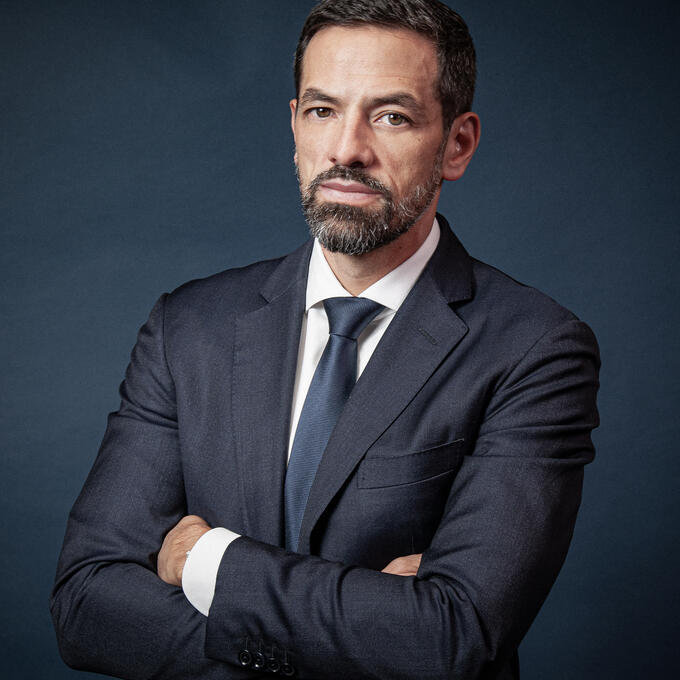
Ricardo Castillo (Santiago de Chile, 1978) has been living in Switzerland for 20 years. The executive studied in Lyon and Geneva and has worked for the country’s banking giants (UBS and Credit Suisse, now absorbed by the former), as well as for JP Morgan and RCF Capital. Since last year, he has been Head of Investments of Mirabaud Wealth Management, a Swiss private bank founded in 1819, which manages Client assets worth close to €40 billion.
The Group, still controlled by the Mirabaud family, has been present in Spain since 2012. There, it manages €2 billion for 900 Clients and has three offices. At its headquarters, on the stately Calle Fortuny in Madrid, Castillo, visiting Spain, explains how they are seeking to manage their Clients’ money—some of the country’s wealthiest families—in a context of geopolitical risk heightened by the conflict in the Middle East.
How are you dealing with such a difficult international situation as the current one?
Answer. We try to analyse the situation with humility, assigning probabilities to extreme events. From there, we assess the potential consequences for financial markets.
What would that extreme event be?
A prolonged closure of the Strait of Hormuz, through which 20% of the world’s oil and gas passes. The consequences of several months with that route closed could be tremendous. Persian Gulf countries such as Kuwait, Qatar and the United Arab Emirates would face a critical situation. Their food supplies arrive by ship, through that passage. In addition, they have stopped receiving tourists and their airports are almost shut down.
But the consequences are far more global…
The closure of the Strait of Hormuz is like the bogeyman. Oil experts have been warning for 40 years that “the bogeyman is coming”. Well, the bogeyman is now here—the threat feared for so many years. We have never seen such a closure, not even during the Iran-Iraq war. The disruption it could cause to the global economy is enormous.
Why has the reaction of the stock market and other financial assets been so moderate so far?
Over the past 50 years, it has been shown that betting on politics, or geopolitics, bringing down the markets is a losing strategy. In 95% of cases, the markets prevail. Secondly, many analysts believe that Trump will ultimately backtrack to some extent and that things will settle down again.
Do you believe that?
We observe a gradual deterioration of the situation, with cumulative consequences. Let me explain: after three weeks of conflict and disruption to shipping through Hormuz, returning to the previous situation is not instantaneous, even if Trump were to agree to end hostilities. Our mission is to monitor developments and prepare our Clients’ portfolios as the economic outlook threatens to deteriorate.
How are you adjusting portfolios?
We are reducing exposure to emerging economies, which may be adversely affected by this sharp rise in oil prices. We were also reducing our overweight position in the technology sector, because in times of uncertainty we prefer safer options. In fixed income, we have opted for bonds with shorter maturities. We are also increasing the weight of cash in portfolios.
By how much?
A. In a standard portfolio, in February we might have had only 4% liquidity, but now we are at 10%. This also allows us to take advantage of investment opportunities as they arise.
Over the past year there have been several moments that invited a drastic reduction in risk…
Yes, and that is a very common trap. It is easy to overreact to a barrage of negative news. That is why I insist on the need for humility when trying to predict what the market will do, and on the importance of sound portfolio construction with proper asset allocation.
Are there any winning sectors in this conflict?
Energy, particularly US companies specialising in liquefied gas transport. These vessels can continue operating relatively safely along secure routes in the North Atlantic and the Pacific, but at much higher prices.
Does the situation resemble 2020, when measures to combat the pandemic caused a severe disruption to supply chains?
Absolutely. At that time, global oil consumption fell by 20%, which is equivalent to the volume that passes through the Strait of Hormuz. This drop in oil supply will affect many sectors. In the case of Covid, at least it was accompanied by a decline in demand. The pressure on oil prices will be enormous.
Can that decline be offset in any way, through reserves or increased supply from other producing countries?
It is not easy. Strategic reserves last for three months. And countries such as Norway have limited capacity to increase production. The Gulf countries are the ones that can modulate supply, but they are constrained by the situation in the Strait.
Will we soon see a rise in overall inflation?
If this continues, certainly. Petrol and diesel are already becoming more expensive. Then the prices of other products will rise. Ultimately, major economies could fall into recession and financial assets would suffer much more. That is the worst-case scenario.
Can gold no longer be considered a safe-haven asset?
It is true that since the start of this war it has corrected slightly, but it had seen a very strong increase in recent months. We still believe it makes sense to have part of portfolios invested in gold, to protect against excessive debt in major economies and concerns about the sustainability of public finances. We believe there are structural factors that will support the price of gold.
Does Bitcoin allow investors to decouple from financial markets?
For Clients outside Spain, we do recommend holding a small portion of their portfolios in cryptoassets. Bitcoin has corrected significantly from its highs (–37% over the past six months), but we believe it still makes sense, as a way to hedge against concerns over traditional currencies and the declining dominance of the dollar.