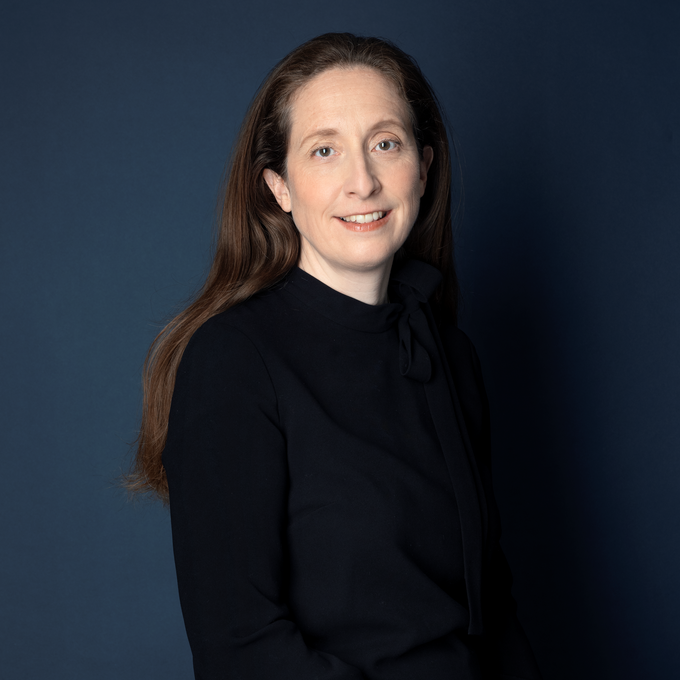

You represent the seventh generation of Mirabaud. How did your career path develop, between family influence and personal choices?
I grew up in an environment where banking was a natural part of everyday life. My father was a partner, as was my grandfather. At home, I always saw a very committed father who worked hard. So I was immersed in this world from an early age, without actually planning to pursue a career in it.
There was no career plan or formal expectations. There were three of us children – two sisters and a brother – and the question of succession never came up explicitly. Things developed gradually.
At EPFL, I chose mathematics because I loved it. I liked the rigour, the abstraction, and chemistry too. The course was demanding, sometimes very stressful, especially during the oral exams. I failed some of them and had to retake them. There were forty of us at the beginning, sixteen at the end. That period taught me something essential: failure is part of the learning process. You can stumble, start again and keep moving forward. Looking back, I think we often put too much pressure on ourselves at that age. Experience teaches us that we can't be perfect at everything and that we gain more by accepting our limitations.
At the end of my degree, I was considering doing a thesis, potentially funded by the Swiss National Science Foundation (SNSF), but in the end the funding didn't come through. My father then suggested an internship at Mirabaud. I started in human resources, then discovered the trading room and financial analysis. I loved it immediately. An internal rotation programme was then set up, including a two-year stint in London. I returned to Geneva in 2008, took over responsibility for portfolio management in 2009, and became a managing partner in 2012.
Working alongside my father, there was no real distinction between father and boss. It was all one and the same. This continuity creates a particular form of responsibility, but it has never felt like an obligation. Above all, there is a very strong desire to do one's best, to contribute to something that will stand the test of time.
In an increasingly complex banking environment, what does leadership mean to you today?
Over the past twenty years, the profession has undergone profound changes. Financial crises have become more frequent, the regulatory environment has become more stringent , and overall complexity has increased. In this changing context, the stability of a set of values firmly rooted within the institution is a key factor in maintaining balance.
In this sense, I see my management style as participatory and analytical. I need to understand before I decide. I cannot make a decision without analysing all the issues involved — some people tell me that I still have room for improvement in this area (smile). For me, a decision must be thought through collectively, considered from different perspectives, and then taken on board. This is undoubtedly linked to my scientific training.
Trust also plays a central role in my eyes: I generally give it right away. Transparency is just as essential: teams must be able to speak up and know that they will be heard. Sustainable performance is based on a demanding but deeply human framework. Finally, I believe that a work environment must remain pleasant: the context is challenging, but it is important to put situations into perspective, maintain a sense of proportion and not let tension become permanent.
After more than twenty-five years at Mirabaud, how do you maintain this open-minded outlook on the outside world?
Part of my time is devoted to internal coordination, ensuring that the organisation runs smoothly. But another part of my schedule is focused on external activities: exchanges with other institutions, other professions, other environments or realities. I also make a point of maintaining contact with clients, as this allows me to stay grounded in the practical issues of the profession.
Open-mindedness is very important to me. I greatly admire people who continue to learn and develop throughout their careers. It's demanding, especially when you already have responsibilities, but it keeps you moving forward.
Precisely, in terms of skills development, what do you see as the challenges for the profession in the coming years?
Continuing education is not a luxury, it is a necessity. Artificial intelligence will inevitably change the way we work. The question is not whether it will happen, but how we will work with it. This requires intellectual curiosity and the ability to constantly adapt.
At the same time, we are facing a generational change. Expectations in terms of flexibility, work-life balance and work organisation are no longer the same. We have already evolved, but we will need to continue to adjust the framework without compromising on standards.
Beyond the systems themselves, what must come first, in my opinion, is individual competence and collective intelligence. The role of the manager is to identify talent, support it and enable it to grow. Sometimes that also means accepting that people will pursue their careers elsewhere; that's only natural.
The role of a manager is often described as exposed, sometimes isolated. How do you experience this responsibility?
I don't recognise myself in that idea. There are six of us on the Bank's Executive Committee in Switzerland and three at Group level; decisions are made together. There is a real sense of collegiality, and that changes a lot of things.
There is also this special family dimension. It creates a form of shared responsibility and very strong trust. I never feel alone in difficult times.
However, leadership means accepting that you cannot control everything. You have to understand the issues at stake, make serious decisions, do your best, and then let go of what is beyond your control. In my opinion, the combination of analysis, commitment and the ability to take a step back is the key to moving forward.