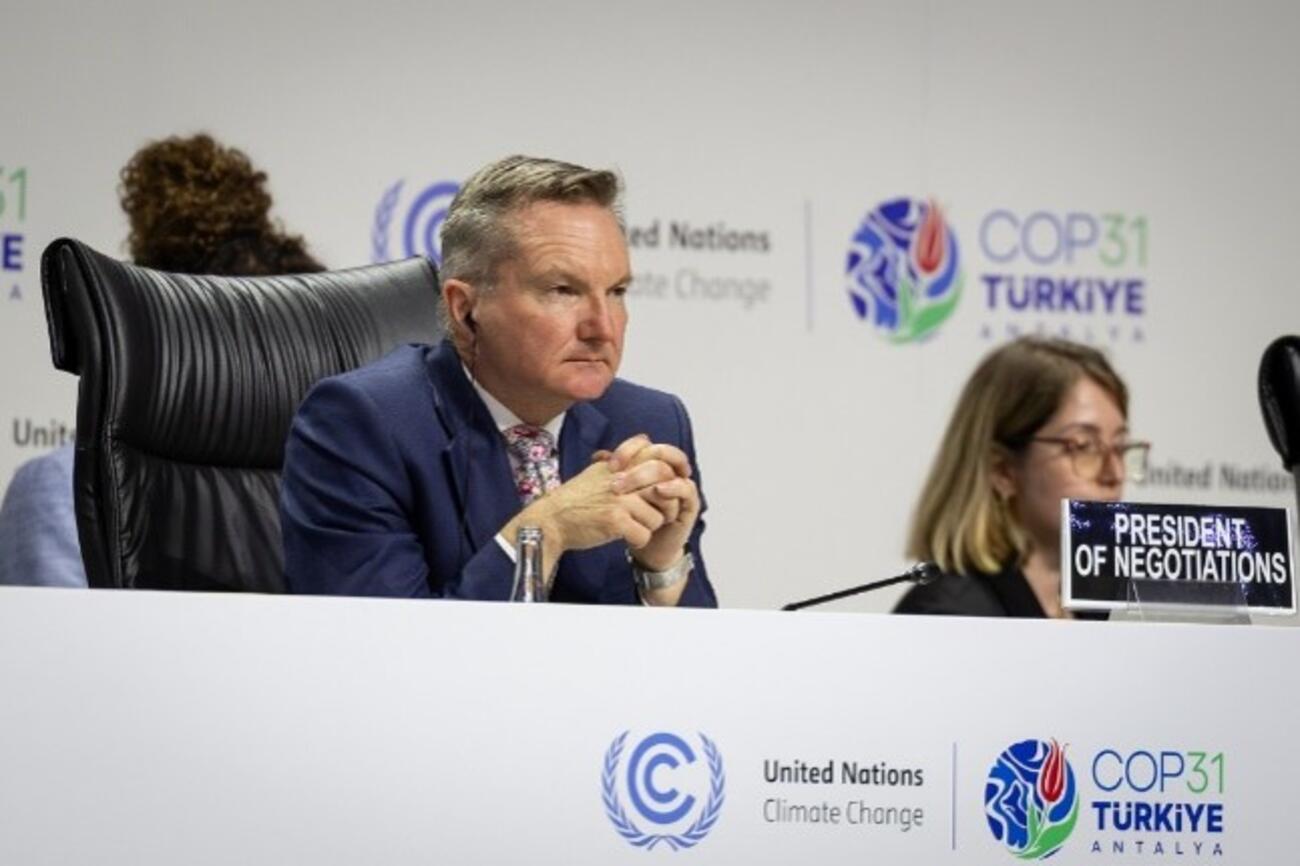

At COP31, eleven years later, the picture looks very different. After one of the longest climate conferences in history, no agreement was reached.
The main sticking point was fossil fuels. The final text contains no explicit commitment to phase down or phase out coal, oil, and gas. Instead, carbon capture and storage (CCS) technologies feature prominently, despite ongoing concerns regarding their cost and scalability.
Over the past decade, the debate has changed profoundly.
COP21 was the conference of ambition.
COP31 is the conference of economic and geopolitical realities.
It highlighted the difficulty of reconciling climate objectives with energy security, industrial competitiveness, and national interests. Climate conferences now appear as much about economic and industrial policy as they are about the environment.
The lack of agreement does not slow climate change
The climate outlook remains concerning. While the Paris Agreement succeeded in creating a historic global consensus, implementation has fallen short of the ambitions set in 2015. Global warming has already reached close to 1.5°C, and current trends remain more consistent with a temperature increase approaching 3°C than with the Paris targets.
The 2°C threshold is far from symbolic. Every additional fraction of a degree increases the frequency and severity of extreme weather events. Beyond the human and environmental consequences, the economic impacts are becoming increasingly significant: infrastructure damage, supply chain disruptions, water scarcity, and declining agricultural productivity.
Climate reality is catching up with us. In Europe, observed temperatures are already exceeding expert projections. Extreme weather events are occurring more frequently and with greater intensity.
This represents a major economic risk. According to several studies, the cost of climate inaction could amount to between 5% and 10% of global GDP by 2050.
For companies, these costs are already tangible. The exposure of firms included in the S&P Global 1200 Index to climate hazards could amount to nearly USD 25 trillion in cumulative costs by 2050, driven by factors such as:
- Damaged infrastructure;
- Business interruptions;
- Supply chain disruptions;
- Rising insurance costs.
The cost of climate inaction is becoming a major economic issue for both governments and businesses.
For investors, these impacts translate into growing risks to earnings, cash flows, and ultimately company valuations.
From mitigation to adaptation
In 2015, discussions were primarily focused on mitigation, meaning the reduction of greenhouse gas emissions. Today, adaptation is taking on a much larger role.
Governments must now manage climate impacts that are already visible while balancing energy security, industrial competitiveness, and economic sovereignty.
Climate risk is no longer only a transition risk; it is increasingly becoming a physical risk.
For investors, opportunities are increasingly concentrated in companies helping economies become more resilient to climate change. Key areas include :
Water management (treatment, distribution, leak reduction, desalination);
Flood protection (levees, drainage systems, urban infrastructure);
Power grid modernization (strengthening and adapting electricity infrastructure);
Building cooling and energy efficiency (high-efficiency cooling systems, insulation, climate-resilient materials);
Climate-resilient agriculture (irrigation, drought-resistant seeds, precision farming).
Demand for these solutions is expected to grow, driven by the increasing frequency of extreme weather events, tighter regulations, and rising public spending on climate adaptation.
Conclusion
The failure of COP31 provides valuable insight into the nature of the climate risks investors are likely to face in the years ahead. The absence of an agreement highlights that governments are moving more slowly than climate risks themselves.
For investors, adaptive capacity is becoming just as important a driver of value creation as decarbonization. Assessing a company's ability to adapt to the consequences of climate change is now as important as evaluating its efforts to reduce emissions.
Investment opportunities are already emerging around businesses that provide practical adaptation and resilience solutions to address the consequences of climate change.
Sources: United Nations, European Environment Agency, European Commission, Parlement Suisse, Kepler CheuvreuxS&P Global, Swiss Re, Bloomberg - The Big Take, RTS, Le Monde