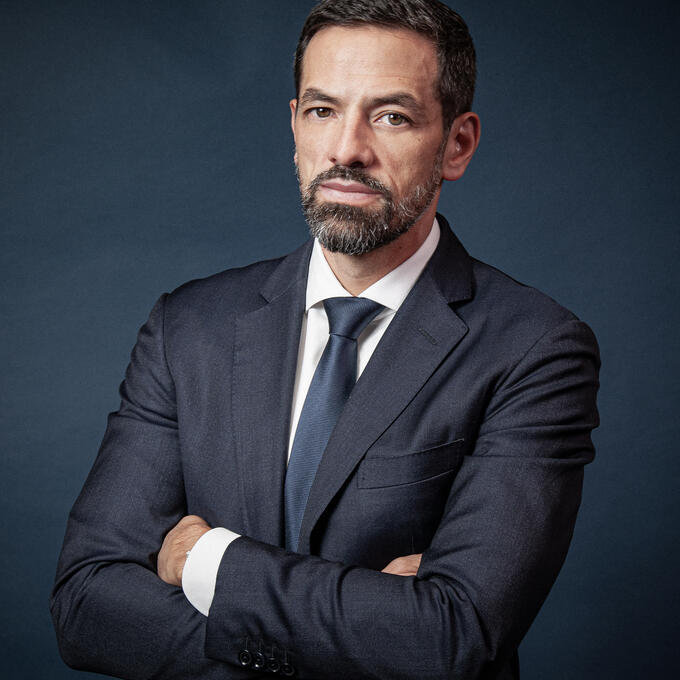
Mirabaud Head Investment Ricardo Castillo: «Sometimes It’s Good to Get Back to Basics»

Ricardo Castillo took over as Head of Investments at Mirabaud Wealth Management in the summer of last year. He spoke with finews about the Federal Reserve, the US and EU economies, and the outlook for Switzerland. This year, he says, should be all about diversification to be prepared for shocks.

The big news last week was the nomination of Kevin Warsh as the new Fed chair. What do you expect from him?

I think it was a surprise for the market. There was no clear statement or indication from him about the direction policy might take. But if you look at what he has said in the past, you know that he believes the Fed should be able to cut rates but also reduce the size of the balance sheet.

Why is that?

Kevin Warsh has repeatedly pointed out that the economy can be driven by productivity without creating inflationary pressure. That is more or less in line with our forecast. Market expectations on the path of rates have not changed following the nomination. And for now, he has only been nominated and still must be confirmed by the Senate.

What will happen next?

There is still the question of whether Jerome Powell will step down from the Federal Reserve Board of Governors. If he does not, Warsh would replace Stephen Miran, someone with similar views. That means the dovish camp is not significantly strengthened. The Fed is today more a collegial body where the chair does not have decisive power. He will need a majority.

What has scared the market is the question of the Fed’s balance sheet. Warsh has been very vocal about the balance sheet being too large. So, if the Fed stops purchases and perhaps starts selling government bonds, who will buy them? Deregulation of the financial sector is a way.

«We don’t expect changes in short-term rates.»

I think Warsh is highly regarded and will restore credibility to the Fed in the long run. By no means is he seen as a puppet of President Donald Trump. Warsh is an authentic figure who has served at the Fed before. He has strong credibility on his own.

How will Warsh react to the weak dollar?

In the long run, there may come a point when a strong economy and an independent and a less dominant Fed will help the Dollar. For the moment, we don’t think we’re there yet nor do we think a stronger Dollar is a priority for Warsh, who’s more inclined to help the economy. When the time comes, reducing the Fed balance sheet by a sizeable amount won’t be an easy task and an important coordination would be essential between the Treasury, US banks with more leeway, and possibly foreign central banks. In any case, someone would need to step to absorb the consequences of fiscal domination and deficits.

However, we don’t expect changes in short-term rates. That’s how the market is pricing it right now. Warsh won’t stage a revolution in the next six months. We don’t believe that–either because he can’t, given the Fed’s collegial structure, or because the market would prevent him from doing so easily. Overall, I think it’s positive and doesn’t change our stance.

Is there a risk of the US economy overheating?

No, we don’t think so. We don’t see inflationary pressure. On the wage side, we are in a no-hire, no-fire economy. The quit rate is very low, and that is very important when it comes to wage inflation. And that is a key element of overall CPI.

Very low gasoline prices are somewhat concerning. We think this is one of the administration’s targets. Trump knows he could lose the midterms if prices suddenly start climbing.

The midterms are currently factor number one for us. The key focus of the election will be the cost of living, especially for the 170 million lower-income Americans. That is the reason for measures such as the cap on credit card interest rates.

The president has the power to intervene in certain areas. Be prepared for him to do a lot to prevent an inflation surge in the next six months.

All these measures resemble a form of state capitalism. But that’s the new reality. These tools will be used to improve life for the bottom 50 percent. Affordability will be a major issue.

For the first time in decades, the US is heading toward negative net migration. Will this have a long-term effect on the labor market?

The most important difference is that you should expect lower monthly job creation numbers. Far fewer than the 150k-200k you used to expect when the economy is growing.

Part of this because fewer people will enter the workforce due to less immigration but also because AI is making companies less inclined to hire in certain categories.

In a way, the US wants to produce more and import less, with fewer people entering its workforce, the solution has to come from an AI-fueled productivity boom.

Remember when Commerce Secretary Howard Lutnick was asked whether he thought Americans would replace Chinese workers in producing high end smartphones, he said that robots would do it. I don’t think it was a joke.

«Major tech revolutions are often supported by the public sector.»

So, you don’t believe in an AI bubble?

AI is first and foremost a technological revolution that will boost productivity and reduce costs for many assets and services. It is a matter of sovereignty to be present.

AI is in its industrial era, where the capacity to build, source materials, and secure supply chains is paramount. In this context I don’t think you stop investing because the profitability of current investments is less clear. Governments are stepping in massively.

Think for instance about the Department of Energy loans to help close power projects, or the new “Project Vault” to build a strategic reserve for rare earths and other critical minerals and metals. Major tech revolutions are often supported by the public sector – like France’s nuclear expansion in the 1960s and 1970s. It was the state, not private companies. No private company can afford to invest that much money for 20 years before generating a return. So, I think we are at a similar point with AI today.

Is there a bubble in the AI-related stocks? The market will price this at some point, but the dominant companies have the capacity to absorb a derating a shock. I don’t think they can afford to miss the AI train though.

Let’s look at Europe. How do you see the economic landscape there?

We have a positive view on Europe. Growth is modest, and we expect the stimulus from Germany’s investment plans to be a boost for the economy. Something needed to happen in Germany. It needed a push, and Chancellor Merz seems to be delivering it.

If you look at the balance within Europe, it is fairly solid. Inflation in the EU is under control; consumer confidence is slowly edging higher. The equilibrium of this low-growth European environment is relatively stable.

Are there any clouds on the horizon for Switzerland?

We expect a stable Swiss economy. Switzerland is playing its own hand, negotiating agreements differently from the EU, with the United States and other countries.

Export capacity remains strong despite the strong franc. Swiss companies have learned to deal with that over the years. But of course, it becomes even more challenging when tariffs are added.

Will the franc continue to strengthen?

The big picture is that only a few countries are fiscally sound – and most are not. There is little chance that the Swiss franc will lose value in the long-term trend. The difference in financial stability is significant.

In the short term, you could face cyclical issues or sudden challenges that might lead to negative interest rates from the Swiss National Bank and cause the franc to depreciate. But we don’t see that for the moment.

Investments in the Swiss franc are sought after by clients in South America or the Middle East, for example. But what can they buy? Real estate is limited, the stock market is relatively small, and the currency is already strong.

«If there is a shock, we won’t be in shock.»

Considering all these uncertainties, what do you recommend to your clients?

We are wealth managers, not traders. Our job is to help people navigate this environment. For us, this year is all about diversification. No one knows what will happen six months from now.

You don’t want to be overexposed to certain assets, such as the Nasdaq 100. You don’t want to put all your eggs in one basket. Beyond growth potential, there is also a valuation and diversification argument.

We want to make sure we are sufficiently prepared. If there is a shock, we won’t be in shock.

We could get hurt – we know that. But if we are properly diversified, that’s okay. We can get through this. We don’t have to overreact and sell at the worst possible time. It’s very basic advice, but sometimes it’s good to get back to basics.

Read the full article on Finews.

Important information

This publication is prepared by Mirabaud. It is not intended to be distributed, disseminated, published or used in any jurisdiction where such distribution, dissemination, publication or use would be prohibited. It is not intended for people or entities to whom it would be illegal to send such publication.
Read more

Continue to

These articles might interest you

Login