AI equities: from building the stack to profiting from it
The AI trade is moving from building the infrastructure to profiting from it, and company earnings will decide the winners.
The AI trade is moving from building the infrastructure to profiting from it, and company earnings will decide the winners.

In brief
Infrastructure: value beyond the chip leader
The most visible winners so far are the companies supplying the “picks and shovels” of AI. Nvidia remains the benchmark: its move from selling individual chips to providing complete AI computing systems (processors, networking and software) has allowed it to capture more value as data centres are built. AI is no longer a chip story: it is an industrial build-out.
But value is spreading beyond Nvidia. Broadcom benefits from custom-AI chips and the networking equipment that connects thousands of processors. TSMC manufactures the most advanced chips. ASML supplies the machines needed to make them. Memory, power and cooling providers become more important as data centres scale. The pressure point is that today’s leading equipment can become tomorrow’s standard hardware, so suppliers must keep innovating to defend pricing power.
Big Tech: spending to defend empires
The hyperscalers (Microsoft, Alphabet, Amazon and Meta) are both the biggest AI spenders and among its earliest beneficiaries. They are using AI to make search more useful, advertising more targeted, cloud services more attractive and internal operations more efficient. Oracle’s large cloud backlog shows how AI demand can translate into contracted future revenue, while Meta’s advertising strength demonstrates that AI can already lift existing businesses, rather than create entirely new ones.
For Big Tech, AI is less a new business line than a race to protect and upgrade existing profit pools. The risk is that heavy spending raises costs before revenues fully catch up, making execution and pricing discipline increasingly important. For now, Big Tech is footing much of the AI bill, and investors will want to see it pay off.
Adoption: from promise to paycheques
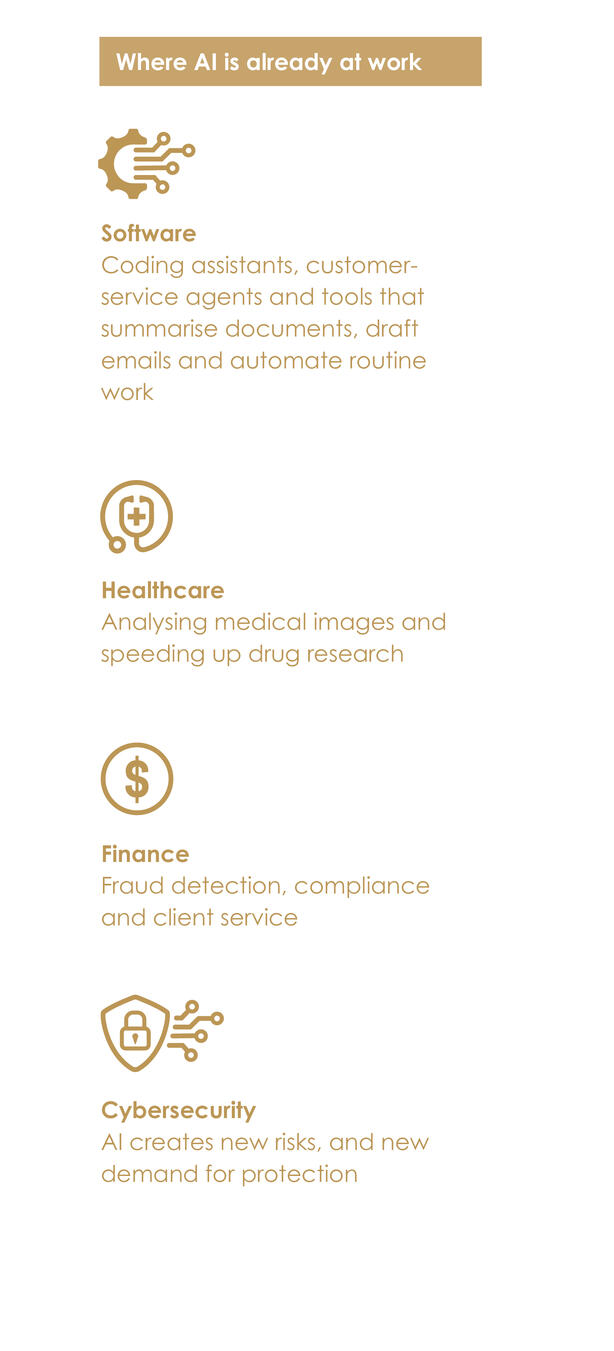
AI adoption is becoming easier to see in everyday business, from software to healthcare, finance and cybersecurity. Cybersecurity is a particularly clear beneficiary, as AI creates both new risks and new demand for protection. The AI winners of the next phase will be the companies that turn intelligence into a product customers willingly pay for. The test is whether these tools raise prices, win new customers or reduce costs enough to show up in earnings.
Investing: follow the cash flows
For investors, the practical question is simple: where is AI revenue already appearing? We favour companies with real customers, pricing power and established distribution, whether they sell the physical infrastructure, run the cloud platforms or embed AI into widely used software. We are more cautious on heavily indebted AI-cloud providers and young application companies still proving their business models. In AI, the best equity opportunities are where adoption is already showing up in revenues, not only in forecasts. A balanced approach (quality infrastructure companies alongside select software and cybersecurity names) offers exposure to the theme while limiting dependence on any single link in the chain.
The macro financing cycle may set the pace of the AI boom, but company earnings will decide who is still standing (and still profitable) when the music slows.
Safwan Mirza, Equity Analyst at Mirabaud Wealth Management
Next chapter – Who pays? In bond markets, it depends Return to Investment View 2027
